Category: Article

  • Qualification of the month – Oral Health Education

    Qualification of the month – Oral Health Education

    NEBDN is supporting its course providers by sharing monthly articles named ‘Crowning Courses’, to highlight the Post-Registration qualifications on offer for accreditation. The articles are also useful for qualified dental nurses wanting to progress their careers, or those thinking of becoming a course provider and wanting to know more about the qualifications we offer and how the course syllabus works.

    This month’s Crowning Courses article features our Oral Health Education (OHE) qualification.

    The course at a glance
    NEBDN course providers offering the OHE qualification can support qualified dental nurses in the progression of their Post-Registration journey.

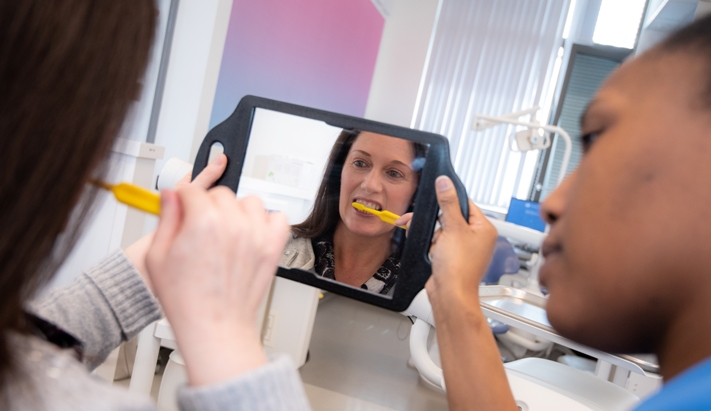
    NEBDN’s certificate in OHE is specifically designed to equip a dental nurse wishing to develop professionally to become an oral health educator, with the knowledge and skills required to be able to effectively deliver oral health care messages, educate various patient groups and have the ability to adapt information and communication to the specific needs of the patient.

    The course content
    For more information on our OHE qualification or syllabus click here

    Exam schedule
    Currently NEBDN provide two exam dates a year in March and September for all Post-Registration exams.

    Prior to sitting the exam, candidates are required to complete a work-based assessment portfolio called the Record of Competence, which can now be completed online for ease of use to candidates, course providers and the environment. Click here for full exam schedule.

    Success stats
    • Most searched for Post-Registration qualification in 2020 on our website
    • Over 7,000 OHE page visits on our website since January 2020, with over 1,600 course provider searches for the qualification this year.
    • Currently, we have 33 course providers offering this course, but as you can see above, the demand is there for new students to join.

    Following a recent survey to Post-Registration candidates, the below graph shows the percentage of how many candidates felt a Post-Registration course helped towards career development, with 87% of candidates agreeing it provides future opportunities to use it in practice.

    As an awarding organisation, NEBDN offer the most Post-Registration qualifications across the UK in Radiography, Implant, Sedation, Oral Health, Orthodontics and Special Care. Offering a wider range of qualifications provides flexibility for course providers wanting to expand and grow their businesses, as it allows students to stay within the same course provider practice when moving on to another area of dental nursing.

    Process for accreditation
    For more information, or to order an accreditation enquiry pack, please complete the Contact Form and return to the accreditation team at accreditation@nebdn.org or telephone us on 01772 429917.

    Benefit of choosing an NEBDN accredited course
    • NEBDN’s long-standing reputation outweighs many competitors, with over 75 years of providing dental nursing qualifications in both pre-registration and post-registration areas.
    • Our primary qualification is recognised by a regulatory body, and as a registered charity we don’t charge any hidden fees or incentives, because our vision is to support the education and development of dental nurses in the UK.
    • All candidates who successfully pass their qualifications are awarded certificates of completion as opposed to certificates of attendance which are of different relevance.
    • Holding accreditation for delivery of qualifications indicates that the standards for education, policies, process and procedures in place, highlight an effective quality management system which is the core foundation of a course provider.
    • An accredited qualification could be more favourable with employers who are aware of the standards required to achieve qualification.
    • Accredited courses offer guided learning hours and credits – where appropriate these can be transferred to further education, whereas non-accredited courses cannot offer this opportunity.
    • Students can purchase the widely recognised NEBDN pin badge that dates back to 1951!

    Costs
    • Accreditation fee for existing course providers – no charge
    • Accreditation fee for new course providers £500
    • Course fee to us £195* per candidate
    *Additional fees to students may apply, subject to each course provider policy and course schedule

    Where can this qualification take me?
    A qualified dental nurse who is awarded the NEBDN certificate in OHE will be able to take a more active role in the promotion of oral health and work with patients to help prevent oral disease. You will be responsible for motivating and educating patients to make positive changes to their oral health care routine, and help patients change their behaviour and understand the causes of dental disease.

    Undertaking this qualification will also help to develop your communication skills, which is essential for delivering oral health education and being an effective educator.

    Search for a course provider 


  • Qualification of the month – Radiography

    Qualification of the month – Radiography

    NEBDN is supporting its course providers by sharing monthly articles named ‘Crowning Courses’, to highlight the Post-Registration qualifications on offer for accreditation. The articles are also useful for qualified dental nurses wanting to progress their careers, or those thinking of becoming a course provider and wanting to know more about the qualifications we offer and how the course syllabus works.

    This month’s Crowning Courses article is on our Radiography qualification.

    The course at a glance

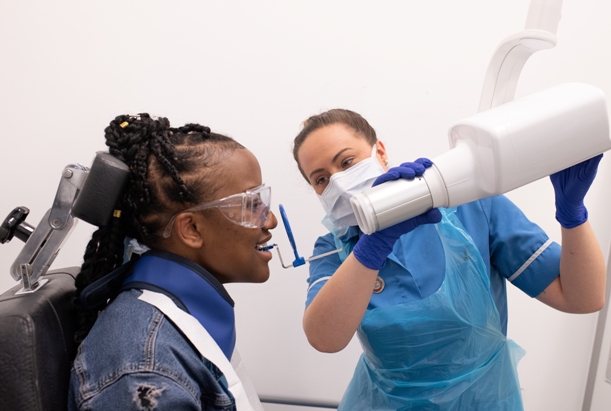
    NEBDN course providers offering the Radiography qualification can support qualified dental nurses in the progression of their Post-Registration journey. Offering this qualification provides an opportunity for dental nurses to work autonomously under the direction of the clinician, whilst working within current UK legislation regarding ionising radiation, allowing them to perform under prescription as an IR(ME)R Operator, taking intra and extra oral radiographs of patients safely.

    The course content

    For more information on our Radiography qualification or syllabus click here

    Exam schedule 

    Currently NEBDN provide two exam dates a year in March and September for all Post-Registration exams.

    Our exam requirements include a work-based assessment portfolio called the Record of Competence, which can now be completed online for ease of use to candidates and course providers.

    Click here for full exam schedule.

    Success stats

    Most searched for Post-Registration qualification in 2019 and most searched for qualification on our course provider search list.
    Over 5,018 Radiography page visits on our website since January 2020, with over 700 course provider searches for the qualification.
    • Currently, we have 26 course providers offering this course, but as you can see above, the demand is there for new students to join.

    As an awarding organisation, NEBDN offer the most Post-Registration qualifications across the UK in Radiography, Implant, Sedation, Oral Health, Orthodontics and Special Care. Offering a wider range of qualifications provides flexibility for course providers wanting to expand and grow their businesses, as it allows students to stay within the same course provider practice when moving on to another area of dental nursing.

    Process for accreditation

    For more information, or to order an accreditation enquiry pack, please complete the Contact Form and return to the quality assurance team at accreditation@nebdn.org or telephone us on 01772 429917.

    Benefit of choosing an NEBDN accredited course

    • NEBDN’s long-standing reputation outweighs many competitors, with over 75 years of providing dental nursing qualifications in both pre-registration and post-registration areas.
    • Our primary qualification is recognised by a regulatory body, and as a registered charity we don’t charge any hidden fees or incentives, because our vision is to support the education and development of dental nurses in the UK.
    • All candidates who successfully pass their qualifications are awarded certificates of completion as opposed to certificates of attendance which are of different relevance.
    • Holding accreditation for delivery of qualifications indicates that the standards for education, policies, process and procedures in place, highlight an effective quality management system which is the core foundation of a course provider.
    • An accredited qualification could be more favourable with employers who are aware of the standards required to achieve qualification.
    • Accredited courses offer guided learning hours and credits – where appropriate these can be transferred to further education, whereas non-accredited courses cannot offer this opportunity.
    • Students can purchase the widely recognised NEBDN pin badge that dates back to 1951!

    Costs

    • Accreditation fee for existing course providers – no charge
    • Accreditation fee for new course providers £500
    • Course fee to us £195*
    *Additional fees to students may apply, subject to each course provider policy and course schedule

    Where can this qualification take me?

    A qualified dental nurse who is awarded the NEBDN certificate in Dental Radiography, will be able to act under prescription as an IR(ME)R operator, in order to safely take intra-oral and extra-oral radiographs of patients. The additional skills acquired, together with the knowledge gained, will enhance your CV and bring benefits to your employer and to patients.

  • A spotlight on Louise Belfield

    A spotlight on Louise Belfield

    This month’s Crowning Careers spotlight is on Louise Belfield, an NEBDN Trustee, who shares her career journey from dental nurse to lecturer in biomedical sciences.

    After I left school at 16, I went to college to do A-levels in English Language, Law, and IT. To this day I have no idea why. Halfway through the term I became sick and missed a lot of teaching. On return, I felt unable to keep up with the content and so I decided to defer and start afresh next term. In the meantime, I needed to earn some money, so I went to the jobcentre. I had no idea what I wanted to do and at 16 I was very shy. The advisor suggested I apply for an apprenticeship in dental technology. I thought it sounded interesting, and they were insistent, so I did. I worked as a trainee Dental Technician for 18 months and began to develop skills in crown and bridge work. During my time there, I began to wonder with increasing frequency about the patients on the other side of the lab tickets and their stories. I saw an advert in a local newspaper for a job as a trainee dental nurse, and I thought that it would be a brilliant opportunity to be more involved with the patients.

    I trained as a dental nurse in a small mixed NHS and private practice and went to night classes every Tuesday. I loved my course and had the most wonderful course providers. In 2003 I gained my NEBDN qualification and I was over the moon to become a qualified dental nurse. My practice was wonderful; we were a close-knit team, and everyone was supportive of each other. The dentist I worked with was an inspiration. He supported me through my training and involved me in his treatment planning and diagnosis processes and would ask for my comments on radiographs. I felt so valued and included as part of the care team and was very happy. One of the most important things he did for me was to take me on his CPD courses, and it was one of those courses that changed the direction of my career.

    I listened to the provider talking about the links between periodontitis and diseases elsewhere in the body, like heart disease and diabetes, and how the bacteria that live in the mouth might link them together. For months after, I dwelled on that idea, and considered what it might mean for our patients; what might to we be able to advise if we knew more about it? Impatient to wait for the research to filter through to practice, I wanted to be part of the driving force, investigating how oral bacteria could have such a fundamental impact on our general health. To do this I decided I had to go to university. With a heavy heart, I left my practice to embark on a new chapter in my life, but I knew I was not leaving my profession behind, I brought it with me.

    Applying to university was exciting, but of course having no A-levels meant I was not eligible to apply for direct entry into a degree programme. I found a degree in Human Biosciences which had a Foundation Year built in, which accepted my dental nurse qualification, along with my GCSEs and work experience for entry. Whilst I was studying, I continued in the profession I loved by working as a bank dental nurse for the local hospital trust. Through this, I got to work with some inspiring, brave, kind, caring, and resilient people in an incredible service. I worked in emergency Dental Access Centres, special care clinics, did domiciliary and school visits – sometimes in the mobile dental surgery van. I also worked for a local NHS weekend on call service, predominantly on reception, and had a part time job in a local practice which I used to fit in around lectures. It was tough working so much and studying for a degree, but with no other financial support it was up to me to manage my time and studies.

    In my final year of university, I focused on my passion for dentistry directly. I had become fascinated with the immune system and it was my favourite subject by far, even while most other students didn’t like it, it captured my imagination in the same way that the links between periodontitis and general disease had done in that CPD course. Moreover, this was the missing link, and I knew that understanding the immune system was vital to determining how oral bacteria interacted with the rest of the body. For my dissertation, I ran experiments and studied how immune cells responded to oral bacteria. I quickly developed a passion for research. I graduated from my undergraduate degree in 2008, and I finally had the tools to investigate the questions that had been burning in my mind for years. I applied to study for a PhD investigating the role oral bacteria played in changing how the immune system behaves in oral diseases. I concentrated on periodontal disease and oral cancer.

    During my PhD, I was able to meet other people with similar research interests. I attended scientific conferences and became an active member of the British Society of Oral and Dental Research. I served as an Early Career Researcher representative on the committee and served a similar role on the Oral Microbiology and Immunology Group committee. I graduated with a PhD in 2013. I am now a lecturer in biomedical sciences at a UK Dental School and have been able to develop my skills in education, particularly in science curriculum and assessment. I completed a post-graduate certificate in clinical education in 2013 and I am a Senior Fellow of the Higher Education Academy. I continue to study oral bacteria and their effects on the immune system and general health, working in a multidisciplinary team of scientists, dentists, and medical professionals, and I am proud to represent dental nurses. I am incredibly grateful to organisations like the Oral and Dental Research Trust who have recognised the value of Dental Nurses in research, and award funding specially for DCPs, which have allowed me to continue my research.

    Over my career so far, three key themes have really stuck out for me
    • The importance of scientific discovery on the impact of oral bacteria on general health
    • Career progression and research opportunities for dental nurses
    • Inclusivity and access to higher education, especially for those who have not come a traditional route into university.

    I continue to represent dental nurses in organisations like the BSODR, and the Association of Science Educators in Dentistry, and have fought to develop fair access to higher education for anyone, and particularly championing the value that a dental nursing qualification and experience can bring to higher education. Through my own experience, I remain dedicated to celebrating, advocating, and promoting the breadth of opportunities for dental nurses, and what our unique, extensive skills and experience can offer in a range of settings. I continue to be inspired by the dental nurses’ stories that I hear through NEBDN and local networks and remain in admiration of those carving their own paths in our challenging, rewarding profession.

  • Life as a key worker through COVID-19

    Life as a key worker through COVID-19

    This month’s Crowning Careers spotlight is on Dorota Mela, who shares her experience as a Dental Nurse working through Coronavirus (COVID-19).

    Dental nursing wasn’t something that I planned to do, it just happened in my life. 20 years ago, when I was young, and not sure what I wanted to do, my friend gave me a leaflet about a dental nursing course run by a local medical school. It seemed like a good idea at the time and my plan was to do it till I figure out what I wanted to do with my life. 20 years later I’m still working in dental nursing, not because I’m still unsure on what I want to do, but because I love it.

    I completed my qualification in Poland in 2000, where I spent some time working in private surgeries. In 2009 I moved to the UK, where I built my experience working in NHS and private practices. Currently I work for the Primary Care Dental Service in the University Hospitals Bristol Trust, as a Float Dental Nurse, Band 4. Recently, after successfully passing my Oral Health Education NEBDN exam, I’ve been offered a place in the Oral Health Promotion team in Bristol. During the weekends I usually help the out of hours team as a dental nurse, but now due to COVID-19 this role is on hold to help me focus on my main job.

    In Primary Care Dental Service, I usually work between seven different clinics located around Bristol, where the leading group of patients are primarily older patients that are medically compromised, or patients that have additional needs and who struggle with access to General Dental Practitioner (GDP) practices. As a dental team we don’t see as many patients as standard GDP practices, but treatments are usually more severe, so we need to be focussed and present. We are expected to be flexible, resourceful, and dedicated, which has helped me in adjusting to my new situation working during COVID-19.

    Working in the COVID-19 pandemic has been challenging and was scary at the beginning. The community service where I work has been transformed into Urgent Dental Care (UDC) hubs. No one I know has gone through anything like this, it’s a new situation. With all the news articles around COVID-19 highlighting the potential risks of infections, this has built up fear and created lots of questions from patients.

    Each day we face a lot of new challenges, but with guidance and advice from the dental hospital, we manage to create a safe working environment. There is a limit to how many patients we can see daily to deliver safe treatment, so spaces are allocated very carefully to people who really need urgent dental help, which is a big challenge and responsibility for triaging dentist, as we all know what we would consider to be urgent treatment doesn’t always meet patients perception of immediate need. We work in small groups which includes a treatment coordinator, dentist and two nurses. As a team we have increased our focus on communication. This part has become more critical now than ever, to ensure additional requirements whilst working around COVID-19 are met safely and follow the latest guidance. Before taking patients to surgery, we all have a small briefing to cover any government/practice updates. Hence, everyone knows exactly what treatment they can expect and what kind of equipment is going to be needed. The whole patient journey through to treatment is planned well in advance, to be as prepared as possible.

    For me personally, all of this was a very scary experience to start with, we all felt the same, and even now there is an element of stress, but every single patient seen in the hub is giving me more confidence and assurance in the service we are providing during this difficult time.

    There is no less or more important job to do, we all must rely on each other’s professional judgment. It’s phenomenal how this has created a special bond within the team. It’s given a new level of trust and solidarity to each member. For me, the most essential aspect of my job now is efficient communication. Every day I learn something new, so I try to pass my experience to others, and they do the same. The morale is much stronger than usual and the fact that that every single patient who I see in the UDC hub really appreciates my work, helps a lot. People have been sending cards and other small gestures alike to show their gratitude. It shows me that we are still as needed here as we were before the pandemic and will be after it all is over. Finally, I believe that we will fight COVID-19, and I’m proud to be part of the history. It is a truly rewarding experience and I hope to bring some positivity to dental nurses redeployed or thinking of volunteering their time.

    The below links include volunteer, paid and redeployment job roles.

    https://www.england.nhs.uk/coronavirus/returning-clinicians/dental-professionals/

    https://www.gdc-uk.org/information-standards-guidance/covid-19/covid-19-latest-information/covid-19-latest-guidance-for-england

    https://www.goodsamapp.org/NHS

  • A spotlight on Hannah Grieves

    A spotlight on Hannah Grieves

    This month’s Crowning Careers spotlight is on Hannah Grieves, an NEBDN course provider, who shares her journey from Dental Nurse to Development Manager.

    My career in dentistry started as a trainee Dental Nurse with a small independent practice back in 2005. I qualified with NEBDN in 2006 and went on to gain my Fluoride Application certificate. I always had a passion for dental nurse training and soon began training all new dental nurses within the practice and supporting with their qualifications. Seeing them develop into confident qualified dental nurses gave me such a buzz.

    The practice was eventually sold to a corporate company in 2014. This opened a whole world of opportunities for me. A role was soon advertised for a Patient Care Trainer to cover the area of 12 practices, I didn’t hesitate to apply for it. I was successful in the application and I enjoyed the role for four months. I travelled to the practices and inducted the new trainee dental nurses and managed their training.

    Eventually a job became available in the area for a dual site practice manager. I applied for it and leading up to the interview I spent my spare time learning elements of the role, reading up on CQC manager registration and doing anything that would help me on the day. I was offered the role and honestly it was one of the best moments of my career.

    I began my journey with {my}dentist in 2016, when I relocated to the North East and was offered two wonderful practices to manage. In 2017 the role of Dental Nurse Trainer for the North East & Scotland was advertised by the Academy team and I didn’t hesitate to apply. After being in the role for nine months I was asked to take on the role of Regional Training Partner, were I was involved in the delivery of workshops for Practice Managers. Alongside this the Academy enrolled me onto a Learning and Development level 3 qualification, which I completed at the end of 2018.

    I took over the role of Dental Nurse Development Manager for {my}dentist in October 2018 and I must say it’s the job I have the most passion for. The role is brand new to the business and I was over the moon to be given this opportunity. It combines my love of training and developing dental nurses with managing a team. I am now also an examiner for NEBDN, which I really enjoy doing and find very rewarding. I would recommend this to any qualified dental nurses who have a passion for training and supporting trainees.

    Since joining the academy, I have never looked back. We are a fantastic team, and everyone is so passionate about learning and development. {my}dentist really does support the development of their employees and I couldn’t be prouder to work for them.

    Dental nursing has always had my heart, and to anyone reading this I hope I have inspired you to take opportunities and develop. If I can do it so can you.

    If you’d like to view current job posts click here 

    If you’re interested in becoming a trainee dental nurse click here

  • From Dental Nurse to Dentist

    From Dental Nurse to Dentist

    In this month’s Crowning Careers article, we hear from Suki Nandra, Specialty Registrar in Orthodontics who shares her experience on becoming a Dentist.

    Unlike most dentists, I started my journey in dentistry as a student dental nurse. I sat my NEBDN nursing exam 10 years ago and I am currently a Specialty Registrar in Orthodontics at Guy’s and Medway hospitals.

    After completing my A-Levels I, like many teenagers, was unsure of my future career aspirations. I personally have never been one to favour the academic pathway, so I chose to complete a one-year dental nursing course instead of going to university to study biomedical sciences. The course gave me the opportunity to learn a practical skill where I could work clinically in a hospital and attend lectures on a weekly basis.

    It is an understatement to say when I started as a student dental nurse, I was very naïve to all things dental and at the age of 18 even the workplace seemed foreign. I would still to this day describe my year as a student dental nurse as one of the hardest learning paths I have taken, yet it is likely the most crucial as it paved the way for the rest of my career.

    After completing my dental nurse training, I went on to work as a qualified dental nurse in the orthodontic department at the Eastman dental hospital and assisted postgraduate students. Despite enjoying my job, I couldn’t help imagining what it would be like working on the other side of the patient. By chance I found out that the University of Sheffield accepted dental nurses with A-Levels onto their dentistry programme and after one year I had secured a place in dental school. The University of Sheffield remains the only UK University to recognise and accept the dental nursing qualification as part of a dentistry application. My nursing knowledge and familiarity in the dental environment helped me massively through dental school and luckily made exams involving charting, cross infection and instruments a breeze. Almost certainly, the most important advantage of being a dental nurse before a dentist is that I have a better understanding of how it feels to work on both sides of the patient. I appreciate the frustrations, elations and general emotions that both roles entail during the day. This has helped my working relationships with my team, as I feel a well-functioning team only produces better care for patients.

    Since qualifying as a dentist I have worked in multiple specialties (Oral Maxillofacial surgery, Restorative, Paediatric and Special Care Dentistry) and in multiple settings (Practice, Hospital, Community). Whilst working through training posts I also completed my MFDS (Membership of the Faculty of Dental Surgery) and a Postgraduate certificate in Medical Education.

    This year I have embarked on a three-year specialty training programme in Orthodontics. It is strange to think that I spent years assisting postgraduate students and 10 years later I am one myself. I would not say my journey has been an exceptionally hard transition but it has involved a lot of work. There probably isn’t a more fitting individual than a dental nurse to become a dental clinician and it is definitely more than possible for dental nurses to train as dentists; it’s all about taking that leap.

    For those interested, my article in the BDJ Team describes the application pathways for dental nurses applying for dentistry roles: https://www.nature.com/articles/bdjteam201824.

  • A decade in dentistry

    A decade in dentistry

    This month’s Crowning Career article is from Natalie Watson, Education and Quality Assurance Officer, General Dental Council (GDC).

    Back in 2007, at the age of 16, I began my career in dentistry, prior to the GDC’s introduction of dental nurse registration. At the time, I hadn’t ever considered a career in dentistry and thought of it as a temporary role until I discovered what it was that I wanted to do. I Initially worked as a trainee dental nurse in a busy NHS practice, supporting a hygiene therapist who taught me the skills I needed to successfully carry out my duties. Once I gained more experience in the role, I started to consider the vast career opportunities that were available within dentistry.

    In 2008, I learnt of a dental nursing training programme at Birmingham Dental Hospital and decided that it was an opportunity that I wanted to pursue. This so happened to be the same year that the GDC introduced mandatory registration for dental nurses. Shortly after enrolling in the application process, I was thrilled to be offered a place at Birmingham Dental Hospital. The two years that I spent there gave me access to a wide range of dentistry experience and highlighted the career opportunities that would become available once I had achieved my qualification. The training that I received, as well as the support from tutors and dental professionals, inspired me to explore a career in dental education.

    Once I qualified as a dental nurse, I worked in a mixed NHS and private dental practice for four years and put my skills into practise. Alongside a full-time job, I completed a part-time course in my spare time, gaining a teaching qualification. I also undertook post-qualification courses such as radiography, sedation and impression taking, which enabled me to gain further skills in preparation for a job in education.

    Although I was suitably qualified, I faced difficulties getting into education as employers often viewed me as being too young and inexperienced. However, I was determined to succeed. In 2014, at the age of 23, I secured employment with a dental training provider as a dental nurse tutor and assessor. Over the next four years, I was responsible for teaching the Level 3 Diploma in Dental Nursing as well as the Level 4 Dental Practice Management qualification. My role also involved assessing students within their own workplace to ensure they were meeting the required standards expected of them. This role enabled me to gain qualifications in assessing, internal quality assurance and management.

    In 2018, the GDC opened its Operational Hub in Birmingham and vacancies were advertised, including the education and quality assurance role. I knew that this would be the perfect opportunity to use all of the skills that I had acquired during a decade working in the industry. As a GDC registrant, I thought of this as an exciting opportunity and was keen to enhance my skills further in the quality assurance of dental education. I am now ten months into my role and thoroughly enjoy the variety that it brings. It has also been of great interest to me getting to know more about the GDC and I feel proud to work here.

    As a large focus of the dental profession is lifelong learning, I am eager to gain more skills and further develop in my current role. Dentistry is an exciting career and there are various opportunities available if you put your mind to it and set yourself achievable goals. Upon reflection, it is rewarding to know that the aspirations I set for myself when I was younger have been achieved and I look forward to a long career in dentistry.

  • A Spotlight on Ann Lilley

    A Spotlight on Ann Lilley

    This month’s spotlight is on Ann Lilley, who shares her dental nurse journey from a community-based perspective.

    When I left school in 1988, my first dental nursing post was in a general dental practice in my home town just outside of Bristol. I worked in a well-respected dentist that was much loved by staff and patients. It was a fantastic practice with five surgeries and staff were like family. I continued to work there for eight years during which I trained one day a week at Bristol Dental Hospital. The training course ran for a year and I qualified in 1991 having taken the NEBDN National Certificate.

    During my time at the practice we had many amazing memories, one of which was when the local Bristol BBC made a documentary about dentistry on a programme called “close up west”. They filmed us for a week and it made us feel very important. There was one part where they filmed me all day and then speeded up the film to show a day in the life of a dental surgery. We have been trying to find a copy for years as it would be very funny to watch it now as I was considerably younger and slimmer!

    I left the practice in 1996 to start my family, and decided I would be a mum for a while and seek work later. After less than a year I saw an advert back at Bristol Dental Hospital, where they were recruiting staff to operate the Out of Hours Emergency Dental Service evenings at weekends, for non-registered patients who were unable to see a dentist. This fitted in really well with family life, so I applied for a nursing post.

    Within a very short space of time I ended up managing the service and triaging patients due to the huge numbers attending in pain. Over the years our teams have seen many changes and moved to different sites. I am still a Senior Dental Nurse there and share this role with a wonderful colleague called Donna. I’ve been working for the Out of Hours service for 23 years! Clearly I enjoy it. During our time we have operated dental advice lines for Bristol, BANES and North Somerset alongside the OOHS pain clinics.

    A few years ago 111 took over the triage for OOHS dental patients but we continue to operate the clinics and emergency appointments during evenings and weekends. As my hours were reduced, I applied for a dental nurse post for the Primary Care Dental Service which I already work for, but based in the Community at Weston General Hospital, on behalf of UHBristol NHS Trust. The Primary Care Dental service has seven community clinics across the region. We see patients with additional needs, complex medical histories, phobic children and anyone who is unable to attend a general practice. Sedation is offered when deemed appropriate in our clinical settings to help patients relax during treatment. Domiciliary home care is offered to patients who are bed bound and all patients are treated by a referral system.

    I gained the NEBDN qualification in Sedation Dental Nursing a few years ago and I still feel it was the most interesting course I had ever done. Our tutor at Bristol Dental Hospital is outstanding and I would thoroughly recommend Post-Registration qualification training to everyone. We also operate Hospital Orthodontic clinics here, our Consultant from Bristol Dental hospital operates Out Patients clinics here once a week. We have the opportunity to nurse for Orthognathic and complex orthodontic cases and see the finished results some years later.

    I am the happiest in work I have ever been, I am the joker of the clinic and my job means the world to me. The staff treat patients with such care and we go above and beyond at times. Our trust has just been given an ‘Outstanding’ award by the Quality Care Commission. I am very proud of all we have achieved and would recommend nurses to look for community based work if you are looking for a challenge and rewarding work.

    Fun fact: My passion is singing, and I am part of a local Rock Band called the Cringe, I am often heard singing at work and my patients love it. I encourage everyone to be positive, happy and work hard. Care for others always!

  • A spotlight on Debra Worthington

    A spotlight on Debra Worthington

    This month’s Crowning Careers spotlight is on Debra Worthington, who shares her journey from Dental Nurse to Maxillofacial Unit Manager.

    On leaving school I fell into dental nursing. I had always thought I would pursue a career in general nursing, and it wasn’t until a friend’s father who was a local dentist told me he was looking for a nurse that my journey began. I continued to work in a general dental practice for a further six years, during which I sat the NEBDN national certificate, qualifying in 1983.

    Whilst fully enjoining my work I began to want to broaden my horizons and learn new skills. In November 1992 I secured a role in my local hospital in the Orthodontic Department – this is where my passion for orthodontics began. I went on to work at two further hospital trusts each time gaining more experience, not only in orthodontics but in oral surgery and restorative dentistry. I also gained Post-Registration qualifications in Oral Health, Radiography, Conscious Sedation and Radiography.

    In 2001 I moved to another Trust, while this was further from home I knew I wanted to develop further and moving into this role was the only way I would achieve this. The role enabled me to develop leadership and management skills. I studied for and gained qualifications awarded by the Institute of Leadership and Management. I stayed in this role for nine years, but I still wanted to progress further and started to look for further opportunities.

    The opportunity did come up and in January 2010, I started at Salford Royal Hospital which is where I’m still based now. As the Maxillofacial Unit Manager I am autonomously responsible for the professional leadership and management of a team of community dental nurses, maxillofacial and orthodontic nurses, orthodontic therapists and dental therapists. The specialities which fall into my remit are orthodontics, oral and maxillofacial surgery, special care and paediatric dentistry.

    I am accountable for the overall clinical and operational day to day delivery of clinical standards of care and management of the dental care professional workforce; I endeavour to deliver a high-quality patient centred service which meets patient’s needs.

    I am actively involved in clinical governance, risk management, and I’m the Radiation Protection Supervisor. I have gained a teaching qualification and successfully completed the NHS Senior Leadership Programme.

    I have thoroughly enjoined every minute of my career. It has not been easy juggling a family, working and studying; but if you set yourself personal goals, then with support and guidance, you will achieve them.

    Some interesting facts about me and things I’ve been pleased to be a part of are:
    • My role on the Committee of the Orthodontic National Group (ONG) where I served as Chair for nine years. I am currently two years into a three-year tenure as President. This consists of working at a national level with senior members of the British Orthodontic Society. I attend meetings with the General Dental Council (GDC), and I was invited to meet the GDC when they were reviewing the Scope of Practice in 2013.
    • I am a current member of the Dental Care Professionals Advisory Board at the Royal College of Surgeons in Edinburgh.
    • I have worked with The Centre for Workforce Intelligence, who has been commissioned to report on the future duties of dental care professionals and dental student intake numbers.
    • I worked with NHS England on a scoping document – looking at medicines prescribing for DCP’s.

    Like to know more? Debra will be at our Spring Conference 7 March 2020 discussing details on the ‘Mouthcare Matters’ programme. Click here to book your place.

    Debra Worthington

  • What to expect at the OSCEs

    What to expect at the OSCEs

    More than 1,000 candidates participate in 10 different stations to complete the timed practical exam – the OSCE, which will result in a pass or fail mark. Here, the team at NEBDN talk us through the preparation.

    As part of the National Examining Board for Dental Nurses (NEBDN) qualification, candidates must have completed their written exam first before sitting their practical. Once qualified, successful candidates will receive their NEBDN National Diploma in Dental Nursing and can then go on to register with the General Dental Council (GDC).

    NEBDN does a wonderful job of organising the OSCEs, which is a massive project to manage across multiple locations in the UK – there were more than 550 candidates sitting their exam in London alone! So much work goes on behind the scenes with everyone making a great effort to work as a well-oiled team. It really is an inspiring project.

    How many centres?
    The number of centres and locations may change each exam, depending on how many candidates pass their written exam. The June exam had five centres – Belfast, Birmingham, London, Manchester and Swindon.

    How many candidates?
    June 2019 had 1,032 candidates sit the exam.

    How many are there in a year?
    The OSCEs run twice a year – once in January and once in June.

    What can a dental nurse expect on the day?
    Once candidates arrive at the examination centre, they will register for the examination. They will need to bring their photographic ID and candidate notice (without these they will not be allowed entry to the examination). They will then be shown an area to change into their clinical uniform. Candidates will be given housekeeping instructions followed by a candidate briefing. From this point on, they are in examination conditions and must listen carefully to all instructions. Candidates will be given a handbook containing copies of the OSCE candidate instructions that they will see in the exam prior to going in, then they will be taken to the examination room.

    How best to prepare?
    Preparation for the OSCE exam should be started by the course provider and will include a full mock exam. In preparation for the OSCEs, candidates should refer to the candidate briefing, the GDC Learning outcomes and the NEBDN curriculum information found on the website under National Diploma – Resources. The curriculum states the assessment methods used for each learning outcome. Revision should focus on the topics that are assessed by OSCEs.

    How important is timekeeping?
    Timekeeping is very important. Candidates should check their travel routes a few days before the exams for delays or diversions. Candidates who arrive late won’t be let into the exam.

    What advice do you have to calm those nerves?
    We all get nervous in unfamiliar environments. Candidates will have carried out a mock exam and should feel confident with an OSCE situation. The tasks are something that a dental nurse carries out every day, so we encourage candidates to try to push their nerves aside, take five seconds and breathe during the exam and refer to the candidate instructions, which will be in each OSCE station.

    I’m nervous about people watching me – what advice do you have on handling this?
    Candidates are completing tasks that are simulations of the clinical environment that they work in. Be confident, smile, and try to forget that people are watching.

    Are the examiners friendly?
    Our examiners are dentists and dental care professionals who have been carefully selected based on their expertise and experience in their field. They are briefed to be fair and consistent – they will be friendly but won’t be able to offer any gestures to signal if candidates are completing a task correctly or not.

    Do I need to wear my uniform to the examination centre?
    Candidates should arrive in normal clothes and change into their clinical uniform and shoes, just as they would arrive to their place of work.

    Candidates will be assessed on their professional appearance and behaviour. Footwear should offer protection against spills and be able to be wiped cleaned. Open-toe shoes, pumps/plimsolls and Croc-style shoes are not permitted. A full list is available on our website under Resources – Exam Guidance.

    What are the different stations and how are the various tasks split?
    There are 10 stations in total. There will be stations where candidates will be required to mix dental materials. The mixing instructions will always be available for the candidate to refer to in the exam.

    However, candidates should take time to refer to instructions of materials used in their workplace It is not unknown for a dentist to like a material to be mixed in a specific way but, on many occasions, this is not how the instructions state it should be mixed. The OSCE marking guides for materials always follow the manufacturer’s instructions.

    Some stations require candidates to select instruments and items for clinical use in the correct order relative to the procedure. Candidates should practise laying out items in the correct order in their practice.

    Many of the OSCEs are split into separate tasks within the test. Candidates should read the scenario and then conduct the test carrying out the tasks separately.

    The OSCEs are intended to provide an assessment in a simulated clinical setting. Candidates need to conduct themselves throughout the exam as if they are working in their own surgery.

    What if I panic?
    If a candidate panics during the exam they should remember to take a deep breath and carry on. If that doesn’t work, then the candidate should tell the examiner or helpers that they are starting to panic. Please bear in mind candidates will not receive additional time for stopping.

    Is it true the examiners will not speak to me or answer my questions?
    Very few stations within the exam require the candidate to interact verbally with the examiner. However, there will be stations where the candidate is required to give instructions/information to an actor playing the part of a patient or to the examiner directly. Candidates should be able to give instructions on the care of an appliance, such as a denture, crown or bridge.

    They also need to be able to give pre-and post-operative advice for extractions. Candidates should take advantage of practising these skills in the workplace prior to sitting the exam in a timed environment. Candidates need to communicate with the actor as if they were a real patient. All stations are five minutes in length.

    How long after my exam will I have to wait for results?
    Once the exam has finished, NEBDN has to collate all of the marks. This is done via an online tablet application and sent for processing. All marks have to be ratified and this usually takes up to six weeks to complete.

    All of NEBDN’s exam schedules are available on the website under the Qualifications area – this provides a rough estimation of dates for when the results go out.

    Will I get feedback?
    Each candidate will receive a pass or fail mark following their exam via postal service. NEBDN does not provide an overall pass mark percentage to any candidates, but they do offer a candidate performance report to those who fail the exam and there is a charge for this service.

    The feedback report will highlight the stations where the candidate failed, including a list of any items they didn’t correctly complete. Candidates who fail automatically get enrolled to the next exam as long as their Record of Experience (RoE) is in date.

    Is there anywhere online I can access resources that will help me to pass?
    NEBDN upgraded its website in May and has dedicated pages of information and a new course provider search function.

    Under the Qualifications tab – National Diploma, candidates will find a resources list with documents such as pass mark guidance, an exam schedule and candidate briefing for the OSCEs and much more.

    Written by NEBDN and published in the Dental Nursing Journal September 2019 edition.